Do Dental Crowns Feel Like Natural Teeth?
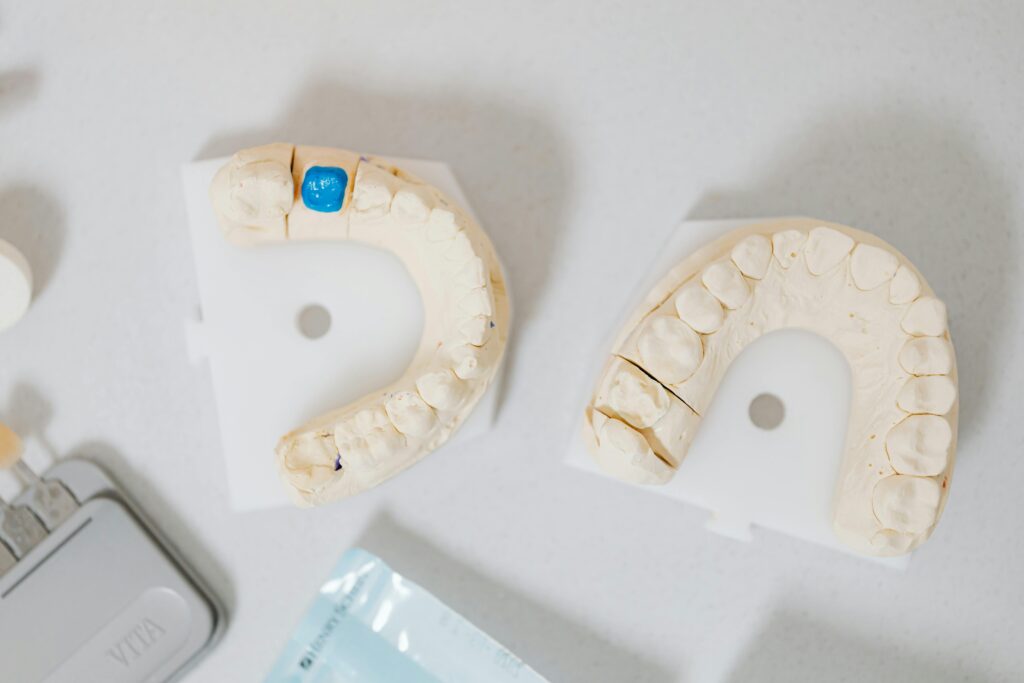
A well-made crown can feel remarkably close to a natural tooth, but "close" is the key word. Most patients do not spend their day noticing a properly fitted crown. They chew, speak, smile, and move on. That is the practical goal. Not perfection in some abstract sense, but comfort, function, and confidence so consistent that the crown fades into the background.
That said, dental crowns are not identical to untouched enamel. They are restorations, crafted to replace damaged tooth structure, protect a weakened tooth, or restore shape after treatment such as a root canal. Whether they feel natural depends on more than the material itself. Fit, bite alignment, gum health, the condition of the underlying tooth, and the patient's own bite habits all matter.
People often ask this question because they are trying to picture life after treatment. Will the crown feel bulky? Will it click against other teeth? Will hot coffee feel different? These are sensible concerns. In practice, most of the "feel" of a crown is decided in a few very specific moments: how accurately the tooth is prepared, how precisely the crown is made, and how carefully the dentist adjusts the bite at the final appointment.
What a natural tooth feels like in the first place
It helps to start with a simple truth. Most people are not consciously aware of their natural teeth unless something is wrong. You notice a tooth when it is sensitive, rough, cracked, loose, or hitting too hard. A healthy tooth feels neutral. It belongs in the mouth without demanding attention.
A crown should aim for that same neutrality. It should not feel sharp to the tongue, high when you bite, or oversized near the gumline. If the contours are right, your lips and cheeks adapt almost immediately. If the crown sits properly in the bite, your jaw muscles stop thinking about it. That is usually the benchmark clinicians use. Not whether a patient says, "This feels exactly like the original tooth from ten years ago," but whether they say, often within days or weeks, "I don't really notice it anymore."
There is also a sensory distinction worth understanding. A natural tooth has living tissue inside unless it has had root canal treatment. That inner tissue can detect temperature and pressure in a nuanced way. A crowned tooth may still have some of that feedback if the nerve is alive, but the external surface is no longer natural enamel. So while the tooth can still function normally, the sensation may be slightly different, especially in the beginning.
Why some crowns feel natural almost immediately
When crowns feel seamless from the start, several things usually went right at once. The preparation preserved the right shape. The lab or milling system captured accurate details. The contact points with neighboring teeth were snug but not excessive. The chewing surface matched the patient's bite pattern instead of merely resembling a textbook tooth.
Patients are often surprised by how small a discrepancy can make a crown feel "off." A tiny high spot, one that may measure only fractions of a millimeter, can make a person feel as if the entire tooth is too big. The jaw is exquisitely sensitive to premature contact. It does not take much to trigger that awareness.
The texture matters too. Natural enamel is smooth, but not slippery in the artificial sense. A polished ceramic crown can feel a bit unfamiliar to the tongue for the first few days, especially if it replaces a tooth that had a rough filling or broken edge for a long time. In many cases, what feels strange at first is actually a return to the proper shape.
I have heard patients describe this in opposite ways. One person says, "It feels thicker than my old tooth." Another says, "It feels too perfect." Often both are reacting not to a bad crown, but to the fact that the original tooth had been chipped, worn down, or decayed for so long that the mouth had adapted to an unhealthy shape. Restoring anatomy can feel unusual before it feels normal.
The first week can be misleading
The earliest impressions after a crown appointment are not always reliable. The gums may be mildly irritated from the procedure. The tooth may be a little sensitive if it still has a live nerve. The jaw may be tired from keeping the mouth open. Even the temporary cement used in some cases can alter sensation until the final crown is bonded or cemented.
For that reason, dentists usually distinguish between normal short-term awareness and signs of a real problem. Normal awareness often includes a sense of newness, mild pressure when flossing around the crown, or slight temperature sensitivity for a limited time. Concerning symptoms include pain on biting, persistent throbbing, food packing between teeth, or a bite that feels clearly uneven after a few days of chewing.
There is a pattern many patients go through. The first day, the crown feels conspicuous because it is unfamiliar. By day three or four, the tongue stops checking it every few minutes. By the end of a couple of weeks, if everything is properly adjusted, many patients could not point it out without thinking. That adaptation period is common and does not mean the crown is poorly done.
What makes a crown feel unnatural
When a patient says a crown does not feel like a natural tooth, the complaint usually falls into a small number of categories. The details differ, but the themes repeat in practice.
- The bite feels high, so the crowned tooth hits before the others.
- The crown feels bulky against the tongue, cheek, or opposing teeth.
- The contact with the neighboring tooth is too tight or too loose.
- The gum around the crown feels irritated or traps food.
- The tooth remains persistently sensitive or painful after the expected healing period.
A high bite is probably the most common culprit. Patients describe it in vivid, consistent language. "I can only feel that tooth when I chew." "It takes the first hit every time." "My jaw feels tired on that side." A minor adjustment with articulating paper often solves the problem quickly.
Bulkiness is another frequent issue, though sometimes it is partly perceptual. If a tooth was severely worn, the restored version may feel fuller simply because the correct anatomy has been returned. Still, there is a difference between proper contour and overcontour. A crown that is too full near the gumline can inflame tissue and feel awkward to clean.
Contacts matter more than people expect. Too tight, and floss shreds or snaps hard through the space, leaving the area sore. Too open, and food wedges between teeth at every meal. Neither feels natural because both interfere with ordinary chewing and hygiene.
Material affects sensation, but less than most people think
Patients often focus on whether the crown is porcelain, zirconia, porcelain fused to metal, or gold. Material does matter, especially for strength, appearance, and how much tooth reduction is needed. But in terms of daily feel, the fit and bite usually matter more than the brand or category.
Porcelain and other ceramics are popular because they mimic the look of enamel well. When polished and shaped properly, they feel smooth and natural to the tongue. Zirconia can also feel very natural, though it is often chosen when extra durability is important. Gold crowns, while less common cosmetically, have a long history of excellent function. Many dentists appreciate how kindly they wear against opposing teeth when designed well.
What patients notice most from the material side is often temperature transmission. Some crowns insulate slightly differently than natural tooth structure. On a tooth with a live nerve, cold sensitivity may linger briefly after placement. On a root canal treated tooth, temperature sensation from that tooth is usually minimal because the nerve tissue has been removed. That can make the tooth feel different in a subtle sensory way, though not necessarily uncomfortable.
Front teeth and back teeth tell different stories
A crown on a molar and a crown on a front tooth are judged by different standards in the patient's mind. Back teeth are mostly about chewing efficiency and comfort. If the bite is right and the gum is healthy, a molar crown often disappears from awareness fairly fast.
Front teeth invite much closer scrutiny. People notice shape, edge length, speech, and how the tongue contacts the back of the tooth when pronouncing sounds like "s" and "th." Even a slight change in contour can feel noticeable for a while. This does not mean something is wrong. It means front teeth play a more visible and more tactile role in daily life.
A patient with a crown on an upper front tooth may spend the first several days checking the reflection in every bright window. That is normal. The psychological side of adaptation is real. Appearance and feel are linked. If the tooth looks harmonious, people tend to relax into it faster. If the color or shape seems off, the crown often feels more foreign even when the mechanics are sound.
Root canal treated teeth can feel different
A crowned tooth that has had root canal treatment often feels different from a crowned tooth with a healthy pulp. This difference is not usually dramatic, but it is real. Without a live nerve inside, the tooth no longer responds to temperature and internal pressure in the same way. Chewing still feels normal because the ligament around the root provides pressure feedback, but the internal sensory nuance is reduced.
Patients sometimes misinterpret this as numbness. It is not numb in the way a local anesthetic makes tissue numb. It is more accurate to say the tooth is less expressive. Many people never notice. Others do, especially if the crowned tooth is a front tooth or if they are especially tuned in to oral sensations.
A crown after root canal treatment can still feel entirely comfortable and functional. In fact, many such crowns feel better than the damaged tooth ever did, because the source of pain has been addressed and the remaining structure is protected.
The gumline often decides whether a crown feels "real"
One of the least discussed parts of crown comfort is the relationship between the crown margin and the surrounding gum tissue. If the margin is smooth, well-sealed, and appropriately positioned, the gum usually settles and the crown feels clean. If the edge is rough, overcontoured, or irritating, the patient often senses it with the tongue or while flossing.
This is where craftsmanship shows. A technically acceptable crown on an X-ray can still feel annoying if the contour at the gumline is clumsy. The gum is sensitive. It reacts to plaque retention, pressure, and shape. A crown that looks beautiful from the front but makes floss snap or fray near the margin may not feel natural in use.
Patients sometimes report a crown feels fine when biting but odd when cleaning. That feedback is valuable. It often points to an issue with the contact area or margin contour rather than the chewing surface.
How long does it take for a crown to feel normal?
There is no single timeline, but a broad pattern is common. Many crowns feel acceptable the same day and increasingly natural over one to two weeks. Some take three to four weeks, especially if the surrounding gum was inflamed before treatment or if the tooth needed significant rebuilding.
If a crown still feels distinctly wrong after a couple of weeks, Dental Crowns Omni Dental Specialty it deserves a closer look. A bite issue may need adjustment. A contact may be too tight. The tooth may have lingering pulp inflammation. Rarely, symptoms point to a crack extending below the restoration or a need for root canal treatment if the nerve does not recover.
The key distinction is improvement versus persistence. Mild awareness that steadily fades is usually normal. Pain or awkwardness that stays the same, or worsens, is not something to ignore.
When "different" is acceptable, and when it is not
There is a practical middle ground that experienced dentists discuss with patients. A crown does not need to feel metaphysically identical to the untouched tooth of adolescence. It needs to function comfortably, protect the tooth, support gum health, and blend into ordinary life.
Some differences are acceptable. A recently restored tooth may feel slightly more defined to the tongue at first. A root canal treated tooth may have less thermal sensation. A front crown may briefly affect awareness during speech.
Other differences are not acceptable. Sharp edges, constant floss shredding, pain on chewing, chronic food trapping, or a crown that makes the whole bite feel off should be evaluated. Those issues usually do not resolve through patience alone.
A few practical signs that the crown is settling in well
Patients often want to know what "good adaptation" actually looks like in daily life. In a healthy adjustment period, several small signs appear. You stop testing the tooth with your tongue. You can chew on that side without bracing for impact. Floss passes with resistance, but not force. The gum looks calmer, not redder, as days pass. You go half a day, then a full day, without thinking about the crown.
That last detail matters more than it sounds. The mouth is excellent at forgetting structures that are behaving properly.
What helps a crown feel natural sooner
Most of the adaptation is biological and mechanical, but patients can help the process along with sensible habits during the first days.
- Chew gently on the new crown at first, then return to normal use as comfort allows.
- Keep the area clean with careful brushing and flossing, even if the gum is a little tender.
- Notice patterns, not isolated moments, especially with bite pressure and sensitivity.
- Avoid assuming discomfort will vanish if it clearly feels like a bite problem.
- Call for an adjustment sooner rather than later if chewing feels uneven.
There is a common mistake people make after crown placement. They baby the tooth for too long out of fear, then the crown continues to feel unfamiliar because it is not being used normally. Within reason, function helps adaptation. If the dentist has placed the crown and said it is ready to use, gradual return to regular chewing is usually part of the process.
The dentist's role is bigger than the crown itself
Patients sometimes talk about crowns as if they are products, almost like choosing a tile or a lens. In reality, the crown is only one part of a clinical system. The same material can feel excellent in one mouth and awkward in another depending on preparation design, impressions or scans, temporary phase management, cementation, and follow-up adjustments.
This is especially clear in complex bites. Someone who clenches, grinds, or has multiple worn teeth may need more nuanced adjustment than a straightforward single crown case. A patient with gum recession or a very strong bite may notice details others would never perceive. In those cases, "natural feel" is less about a generic crown and more about tailoring the restoration to a specific mouth.
That is why small refinements after delivery are not signs of failure. They are often part of good care. A five-minute bite adjustment can transform a crown from bothersome to invisible.
So, do dental crowns feel like natural teeth?
Most of the time, yes, at least in the ways that count day to day. A high-quality crown that fits well, suits the bite, and respects the gum tissue can feel so natural that a patient forgets it is there. That is the usual target, and it is achievable in many cases.
Still, a crown is a restoration, not a rewind button. Some patients notice a subtle difference in sensation, especially on front teeth or root canal treated teeth. Others need a short adjustment period before the crown stops feeling new. And when a crown does not feel right, there is usually a fixable reason, not a vague mystery.
The most helpful expectation is a realistic one. Dental crowns should feel comfortable, stable, and easy to live with. They should let you chew without hesitation, smile without self-consciousness, and clean around the tooth without frustration. When those boxes are checked, most people stop asking whether the crown feels natural, because they are too busy forgetting it is a crown at all.
Omni Dental Specialty
1690 E Gonzales Rd, Oxnard, CA 93036, United States
+1 805-410-9603
FAQ About Dental Crowns
How long do crowns last on teeth?
A dental crown often lasts about five to fifteen years, although some last longer. Material, the underlying tooth, oral hygiene and grinding habits affect longevity. Regular dental examinations help identify wear, decay or a loose crown; no lifespan is guaranteed.
How much does a tooth crown cost?
There is no single price for every crown. Material, laboratory work, the condition of the tooth and any additional treatment affect the fee. Ask for a written estimate and confirm your insurance benefits, exclusions and out-of-pocket costs before treatment.
What is the downside of crowns on teeth?
A conventional crown usually requires irreversible removal of some tooth structure. Possible problems include sensitivity, chipping, loosening and decay at the crown margin; some teeth later need root canal treatment. Discuss your tooth's condition, material choices and suitable alternatives with your dentist.